

#staycuriouswithkiddlab
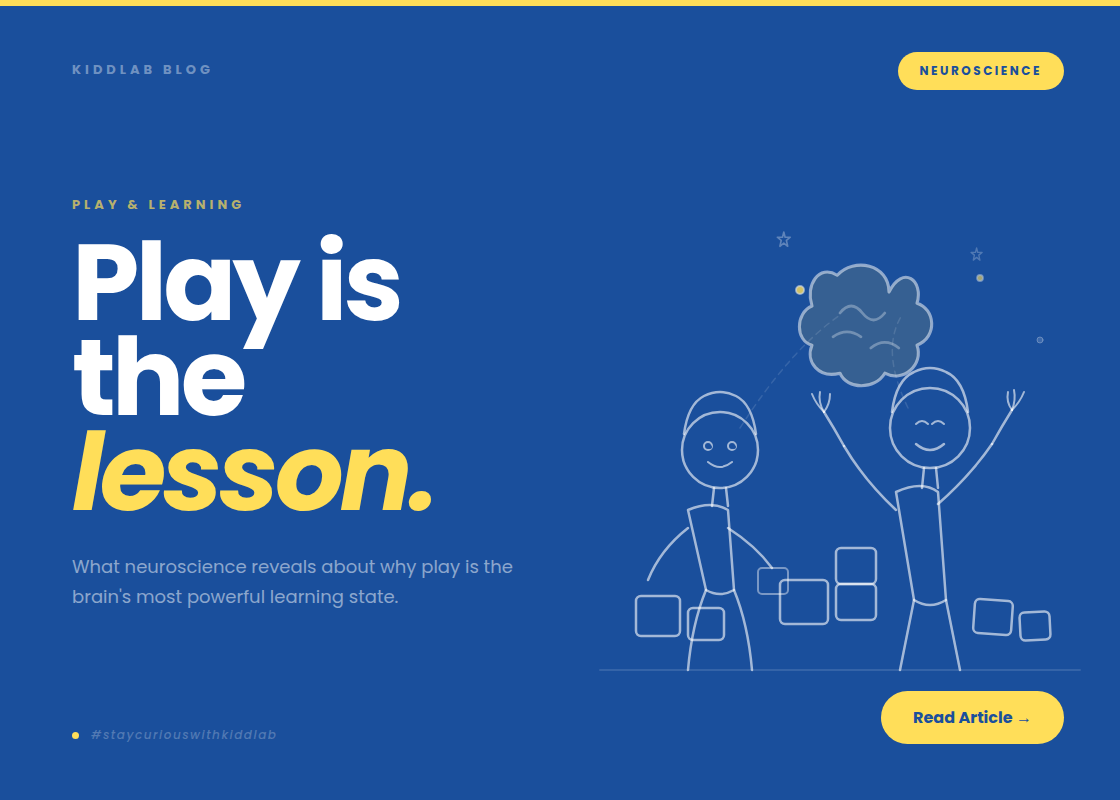
Play Is the Lesson
Play is not what happens before the learning starts. According to decades of neuroscience, it is one of the most powerful mechanisms through which learning actually occurs — shaping the brain, building memory, and developing the cognitive foundations that determine how well children learn everything that comes after.
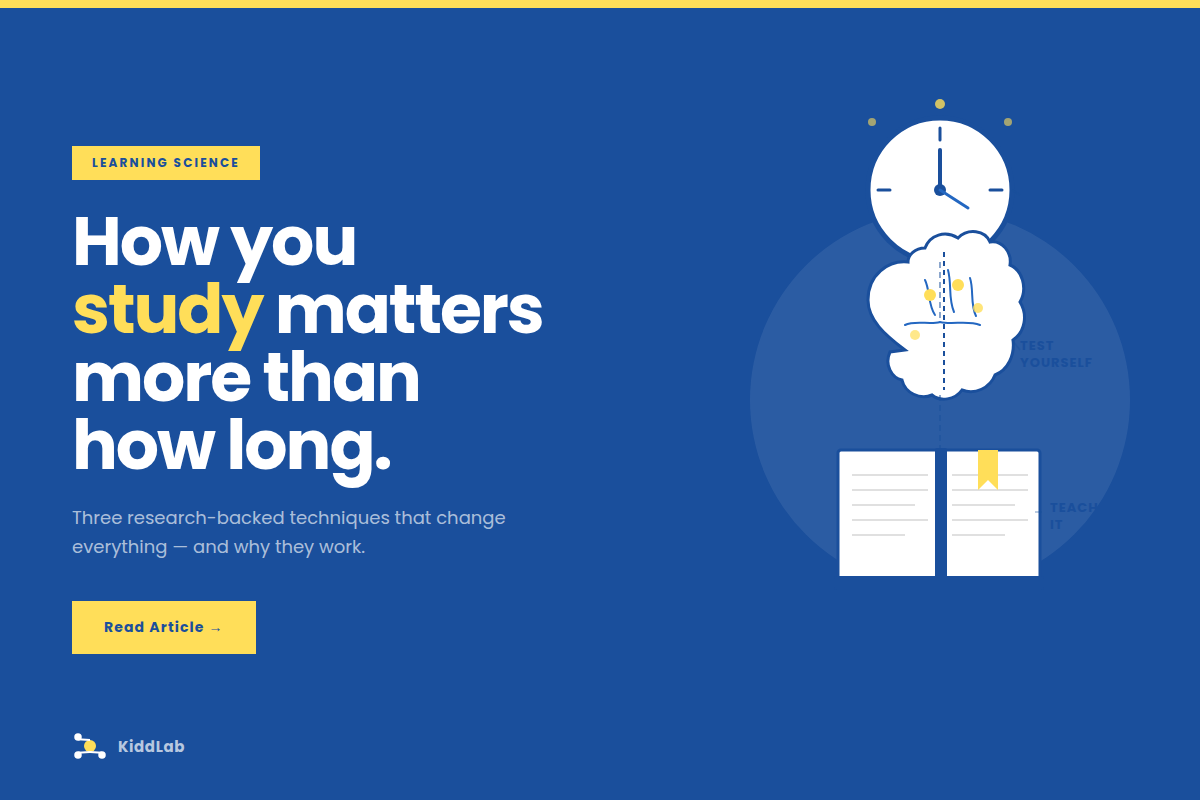
3 ways to make learning actually stick
Most of us were never taught how to learn. We were taught what to learn — and the difference turns out to matter enormously. The techniques that feel most productive — re-reading, highlighting, cramming — are often the least effective. Here's what the science actually says.
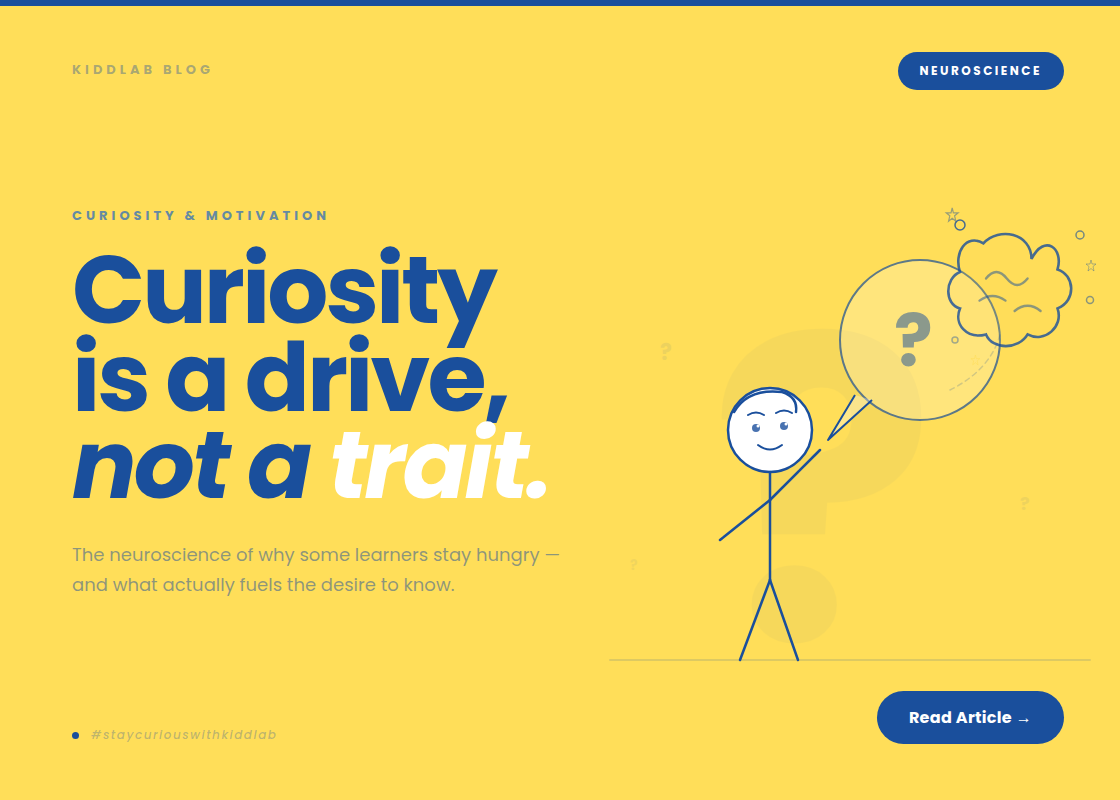
Curiosity Is a Drive, Not a Trait
We talk about curiosity as if some people simply have it and others don't. But neuroscience tells a different story. Curiosity is not a personality trait — it's a neurological state that activates the brain's dopamine and memory systems simultaneously, making everything around it easier to encode and retain. The good news: it can be triggered. Here's what the research says about how.
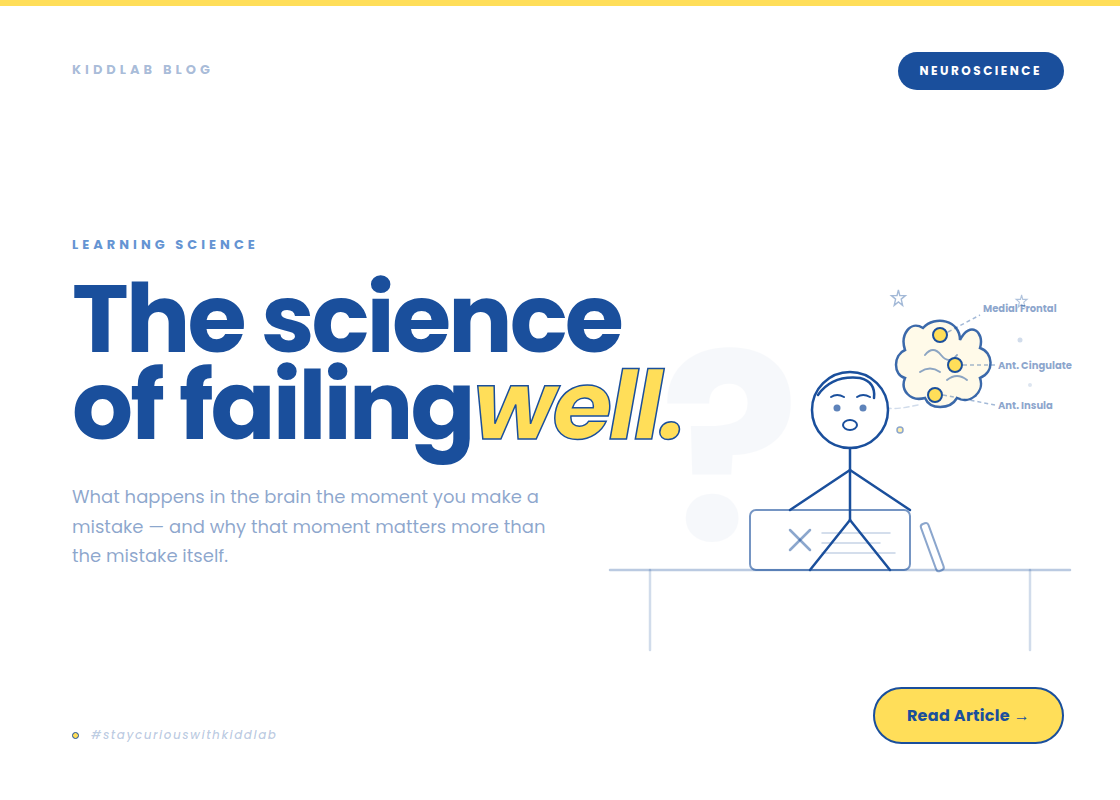
The Science of Failing Well
When you get something wrong, your brain doesn't stall — it mobilizes. In the fraction of a second after a mistake, three distinct brain regions activate simultaneously, flagging the error, sharpening attention, and encoding the correct answer more durably than if you'd never been wrong at all. The science of failure isn't about resilience or mindset. It's about neuroscience — and it changes how we should think about learning entirely.
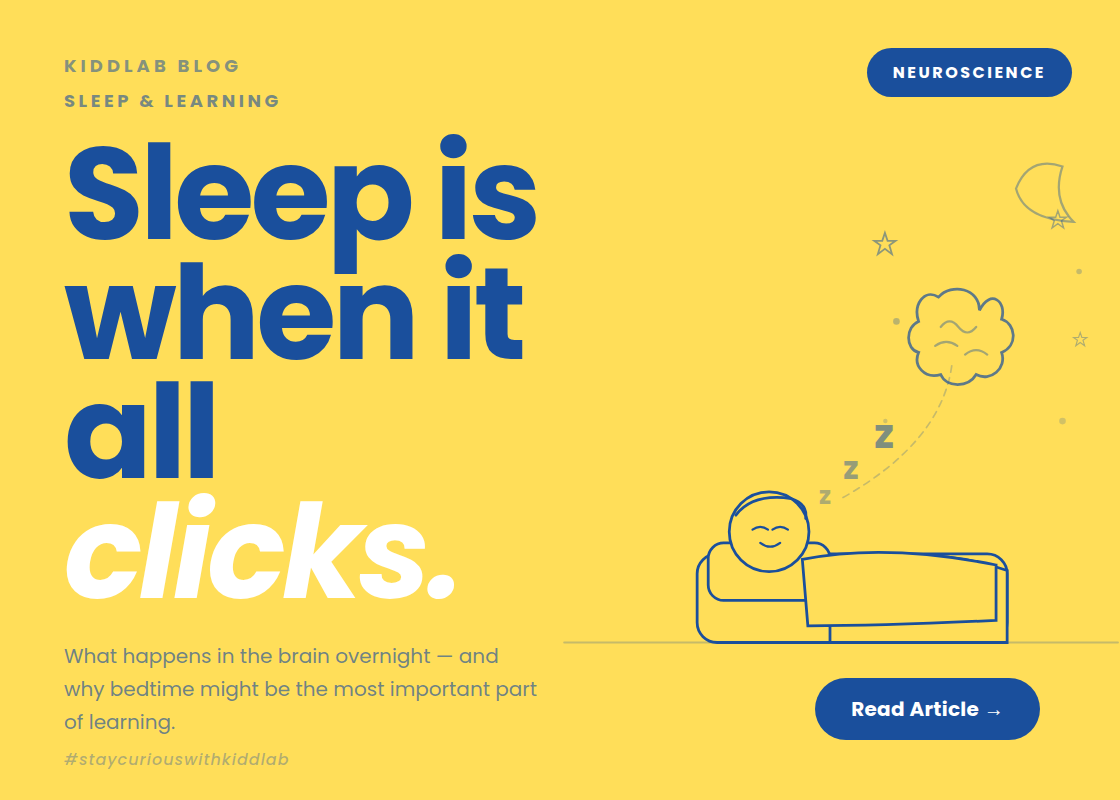
Sleep Is When It All Clicks
Every night, while you rest, your brain gets to work. It replays the day, filters what matters, and moves it into long-term memory — weaving new knowledge into everything you already know. This isn't passive recovery. It's active learning. And the research shows children benefit from this process even more than adults do. Here's what's happening in the brain while you sleep — and why protecting that rest might be the most important learning decision you make.
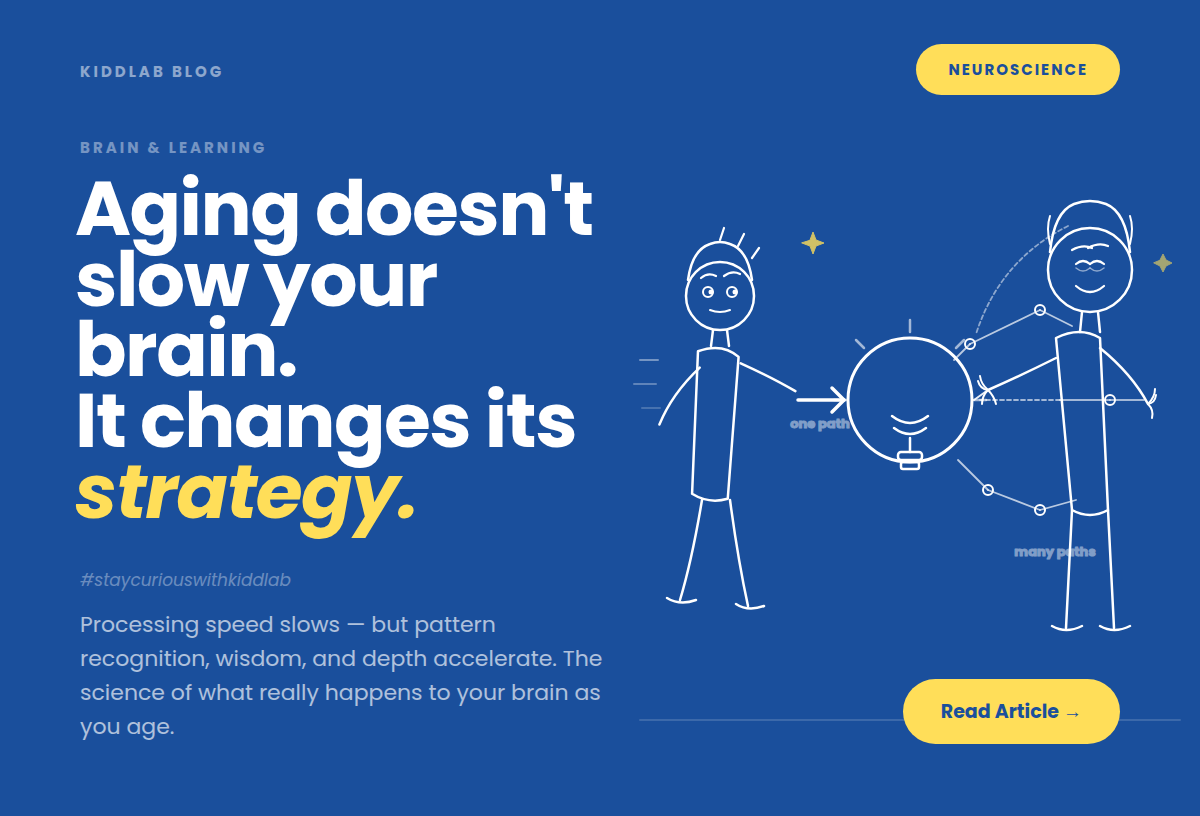
Aging Doesn't Slow Your Brain. It Changes Its Strategy.
Aging Doesn't Slow Your Brain. It Changes Its Strategy. Your brain at 40, 60, or 70 isn't a weaker version of your brain at 25 — it's a different one. In this post, we explore what the science actually says about cognitive aging, why processing speed is only half the story, and what crystallized intelligence means for how we learn across a lifetime. #staycuriouswithkiddlab
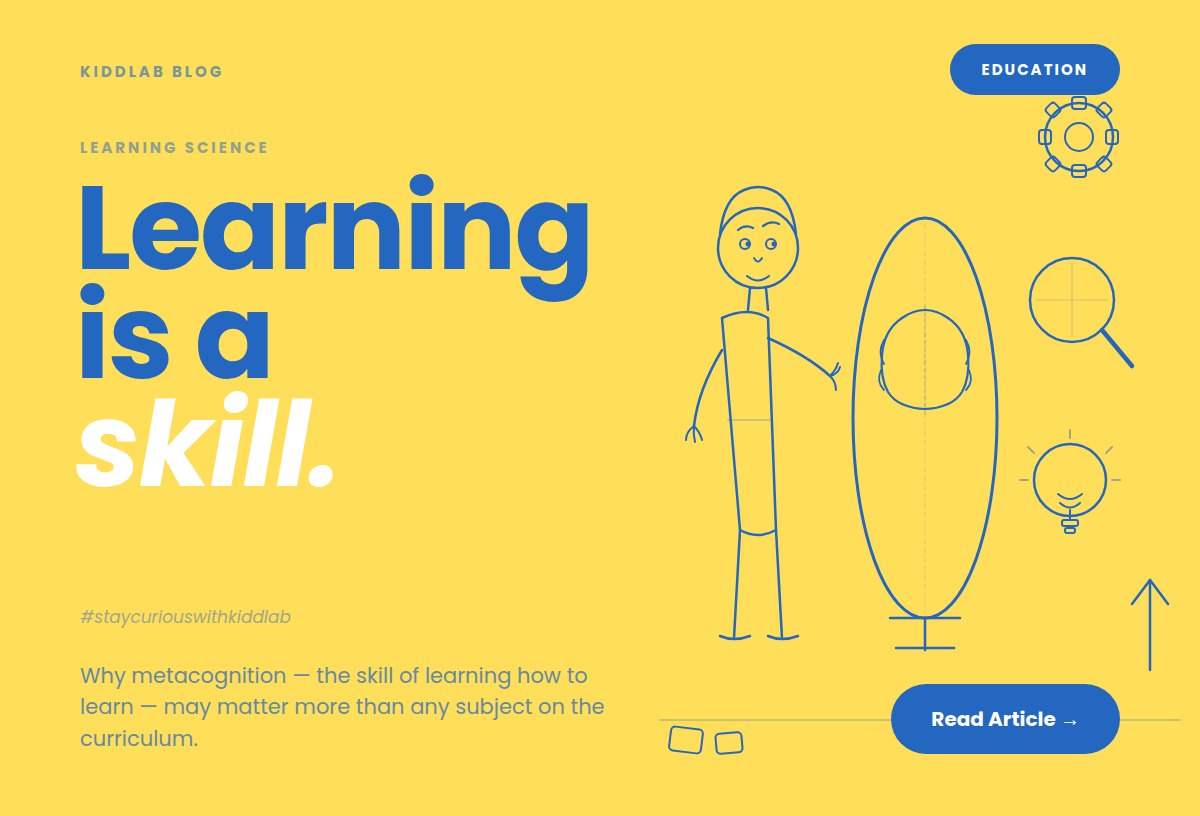
Learning Is a Skill. And Like Every Skill — It Can Be Taught.
We all know learning is important. But do we ever stop to ask whether children actually know how to learn? In this post, we explore the science behind metacognition — the skill of thinking about your own thinking — and why teaching it early may matter more than any single subject on the curriculum.
#staycuriouswithkiddlab
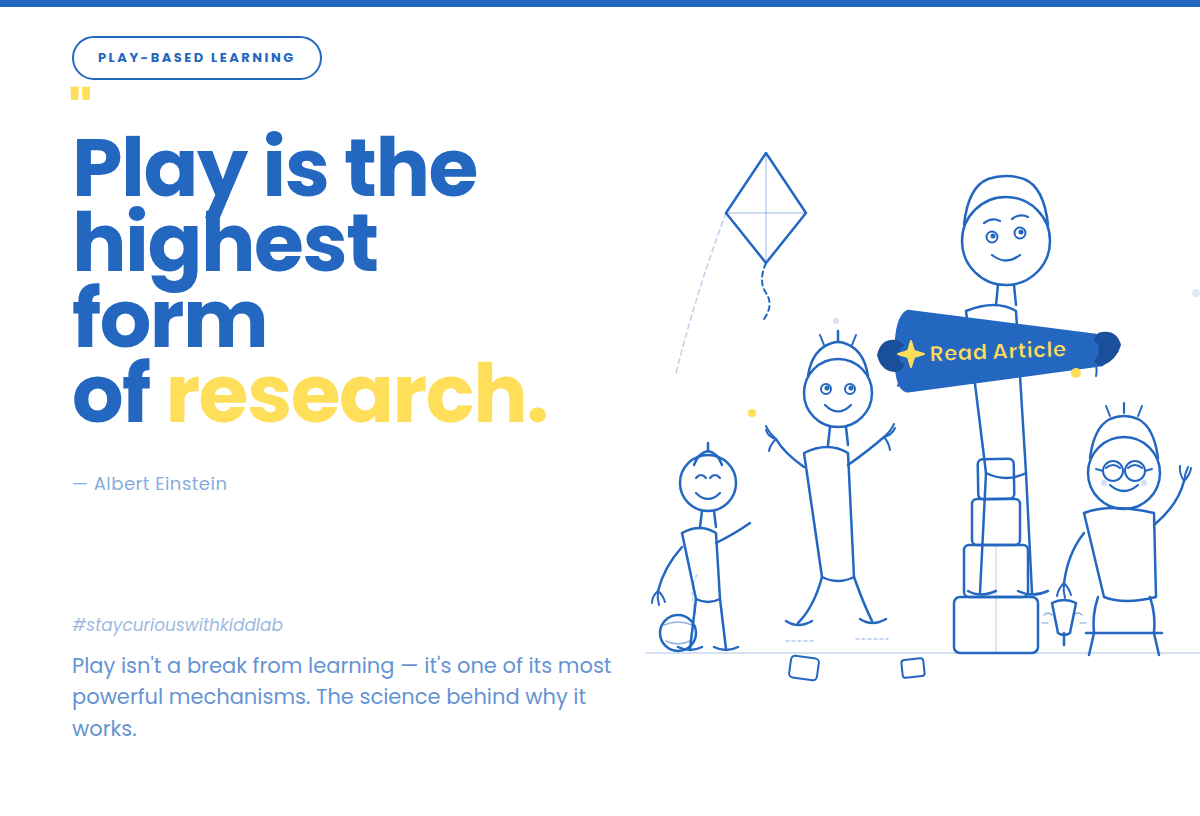
Play as the Highest Form of Research
Play is the highest form of research — Einstein said it, and the science backs it up. In this post, we explore what play actually does to the learning brain, why it doesn't stop working when you grow up, and why the conditions for genuine play-based learning are rarer than most classrooms can offer.
#staycuriouswithkiddlab
Small Groups, Real Learning: How KiddLab Designs Education Around the Learner
But small groups are only part of the picture. In this post, we explore why online and in-person learning are not opposites, why preschool learning must stay screen-free, and what it actually means to design education around the learner — not around convenience.
#staycuriouswithkiddlab